A crash is stressful even when nobody is hurt. Your heart is pounding, traffic is moving past you, and you have to make a handful of decisions quickly. This guide walks through what to do after a car accident in San Jacinto, step by step, including the California reporting rules that a lot of drivers miss.
We tow wrecked vehicles off SR-79, the Ramona Expressway, Gilman Springs Rd and local streets around the San Jacinto Valley every week. Here is what we tell people at the scene.
1. Check for Injuries and Call 911 if Anyone Is Hurt
Safety comes first. Check yourself, your passengers and the people in the other vehicle. If anyone is injured, complains of pain, or seems confused, call 911 right away. Don't try to move someone who may have a neck or back injury unless they are in immediate danger, such as a fire.
Even if everyone seems fine, adrenaline can hide injuries. Neck and back pain often shows up hours or a day later, so pay attention to how you feel afterward.
2. Get Out of Traffic if You Safely Can
If no one is hurt and the vehicles can be driven, move them out of the travel lanes to the shoulder, a side street or a parking lot. Sitting in a live lane on a road like Gilman Springs Rd or SR-79, where traffic moves fast and shoulders are narrow, is one of the most dangerous things you can do after a minor crash.
- Turn on your hazard lights.
- Set out flares or reflective triangles if you have them and it's safe to do so.
- If the car can't be moved, get yourself and your passengers out of the vehicle and away from traffic, behind a guardrail if there is one.
At night or in the dark stretches between San Jacinto and Moreno Valley, visibility is poor. Stand well off the road while you wait.
3. Call Law Enforcement When Needed
Call 911 for any crash with injuries, a driver who seems impaired, a hit-and-run, or vehicles blocking the road. For a minor, non-injury crash, you can call the non-emergency line instead.
Who responds depends on where you are. Within the city of San Jacinto, police services are provided by the Riverside County Sheriff's Department. On state highways like SR-79 and SR-74, and on many roads in unincorporated areas, the California Highway Patrol typically handles the crash. In Hemet, the Hemet Police Department responds inside city limits. If you aren't sure, 911 dispatch will route the call.
California law also requires that if a crash causes injury or death and no officer made a report at the scene, the driver must report it to the CHP or local police within 24 hours.
4. Exchange Information With the Other Driver
California requires drivers involved in a collision to exchange information. Get the following from every driver involved:
- Full name and address
- Driver's license number
- Vehicle registration and license plate number
- Insurance company and policy number
- Vehicle make, model and color
If the driver isn't the owner of the vehicle, get the owner's name and contact information too. Collect names and phone numbers of any witnesses. Stay calm and polite, and don't argue about who was at fault. That's for the insurance companies and, if needed, the courts to sort out.
5. Document the Scene
Your phone is your best tool here. Take more photos than you think you need:
- All four sides of every vehicle involved, close up and from a distance
- License plates
- Skid marks, debris and road conditions
- Traffic signals, stop signs and any obstructions
- The other driver's license and insurance card, with their permission
Write down the exact location, such as the cross streets or nearest mile marker, along with the time and weather. If an officer responds, ask for their name and the report number.
6. Arrange a Tow if Your Car Can't Be Driven Safely
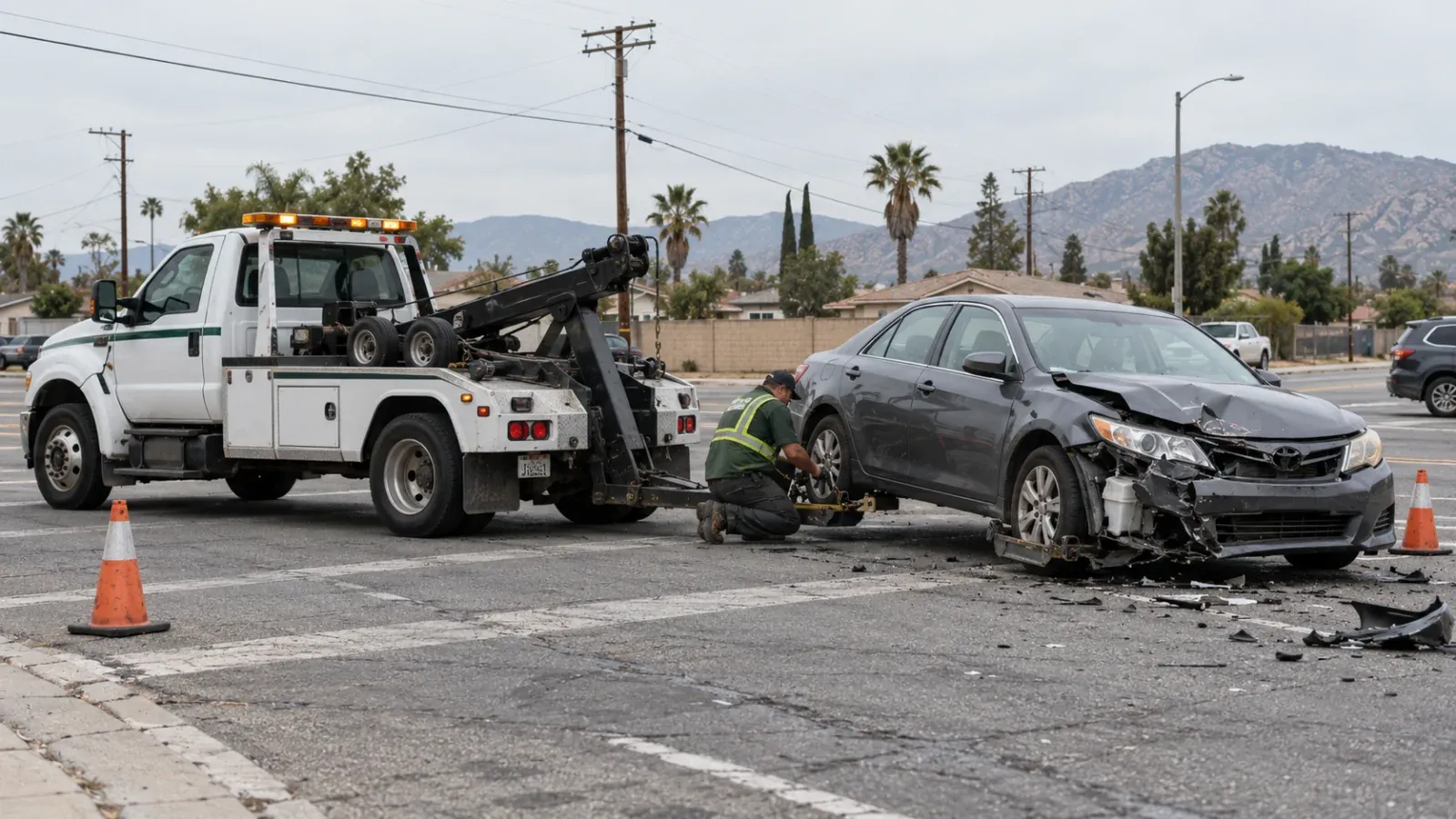
If your vehicle is leaking fluids, has a damaged wheel or suspension, broken lights, or airbags have deployed, don't drive it. Call for accident towing and tell the dispatcher where you are and what happened.
If officers on scene request a tow, their instructions come first. Otherwise, you usually get to choose where your car goes. Common options:
- A body shop of your choice, so the estimate can start right away
- Your home, if you need time to talk with your insurer
- Your dealership, if the car is under warranty or needs dealer-specific repairs
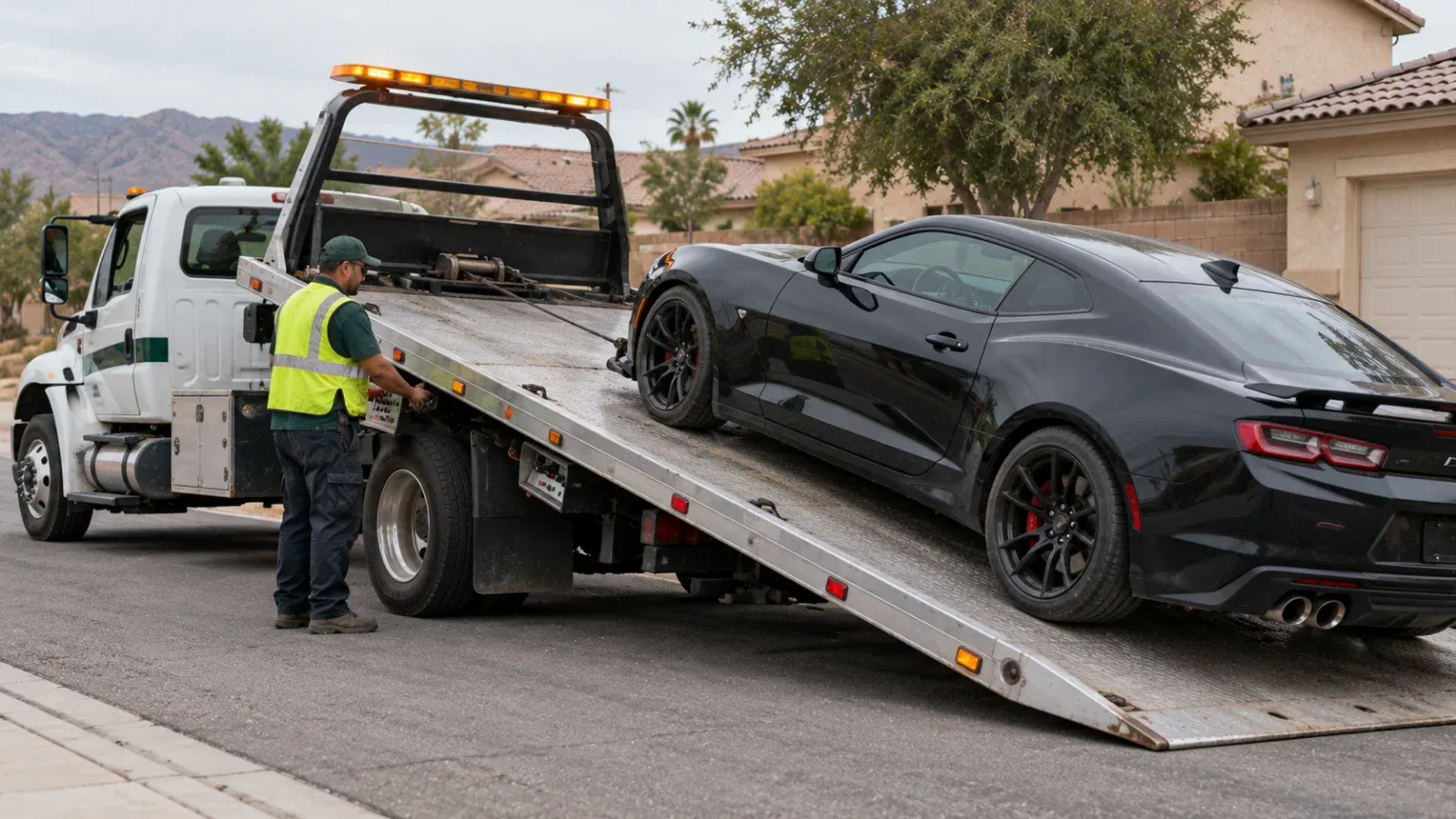
Getting the car to its final destination quickly helps you avoid daily storage fees. For damaged cars, AWD vehicles and EVs, a flatbed tow is usually the safest choice because all four wheels ride on the deck.
Before the truck leaves, take your valuables, garage remote, registration and any personal items out of the car.
7. File an SR-1 With the California DMV Within 10 Days
This is the step people miss. In California, you must report a crash to the DMV on form SR-1 within 10 days if:
- Anyone was injured, even slightly, or killed, or
- Property damage to any one person was more than $1,000.
Each driver must file, regardless of who was at fault. A police report or an insurance claim does not take the place of the SR-1. Your insurance agent, broker or attorney can file it on your behalf, but it's your responsibility to make sure it gets done. Failing to file can lead to suspension of your driving privilege.
With today's repair costs, even a small fender bender can easily pass the $1,000 mark, so if in doubt, file. You can find the SR-1 form on the California DMV website.
8. Notify Your Insurance Company
Call your insurer or start a claim in their app as soon as you can. Give them the facts, the photos and the other driver's information. Keep a simple file or notes on your phone with your claim number, adjuster's name, tow receipt and any repair estimates.
Many policies cover towing after a crash, either directly or by reimbursement. Keep the itemized tow receipt for your claim.
9. Watch Out for These Common Mistakes
- Leaving the scene too early. Leaving without exchanging information can turn a minor crash into a hit-and-run.
- Admitting fault on the spot. Stick to facts. Saying "I'm sorry" can be taken the wrong way.
- Skipping the doctor. If anything hurts in the next day or two, get checked out and keep the records.
- Letting a car sit in storage. Storage fees add up daily. Move it to a shop or home as soon as possible.
- Forgetting the SR-1. Set a reminder on your phone for the 10-day deadline.
Need a Tow After an Accident in San Jacinto?
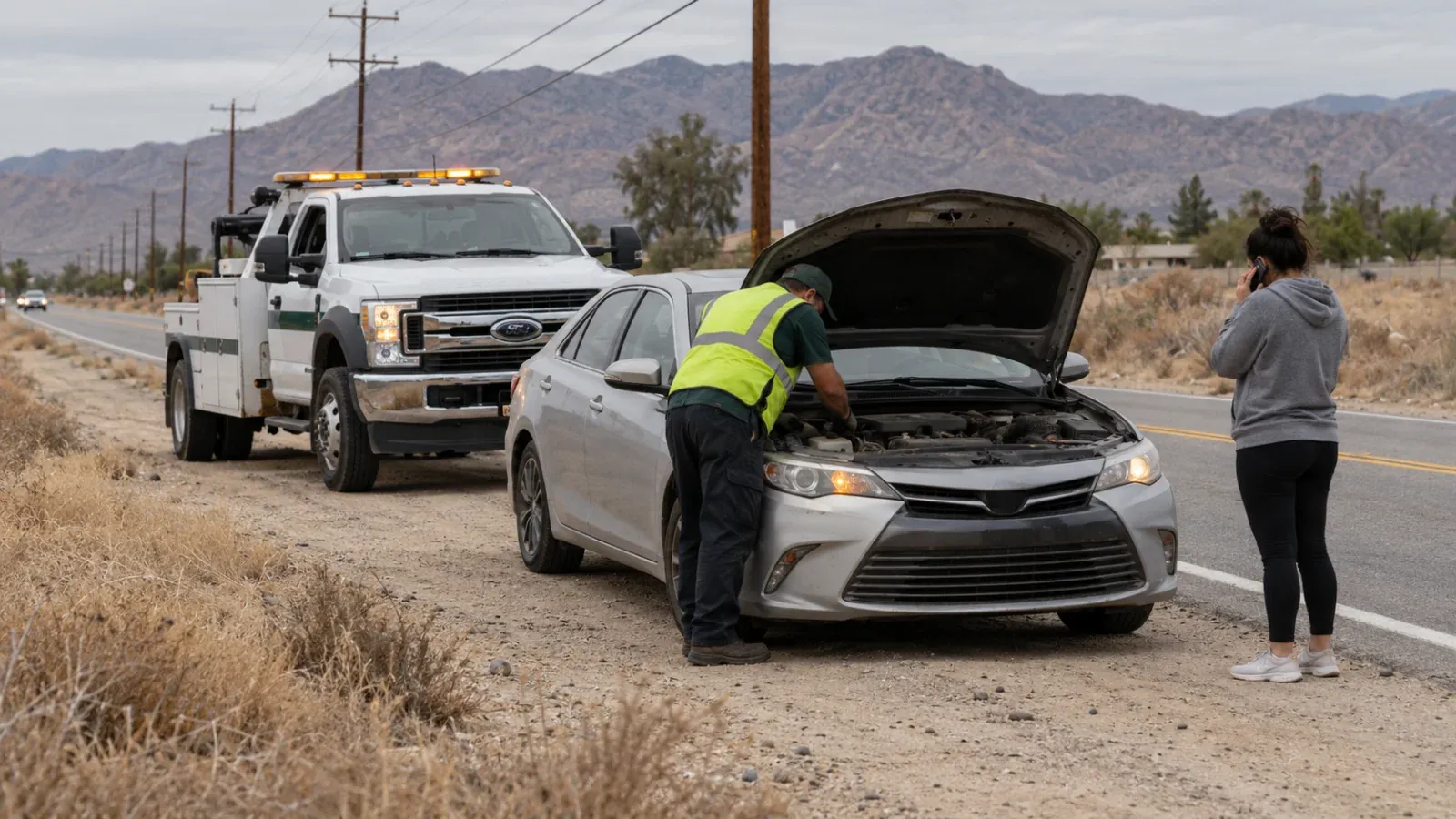
Nick's Towing San Jacinto handles accident towing across San Jacinto, Hemet and the surrounding valley 24/7. We send a flatbed or wheel-lift truck depending on the damage, coordinate with officers on scene, and take your vehicle wherever you choose. If the car still runs but has a flat or dead battery from the impact, our roadside assistance may get you home without a tow.
Call (951) 355-4290 and we'll quote you up front and give you a realistic ETA.