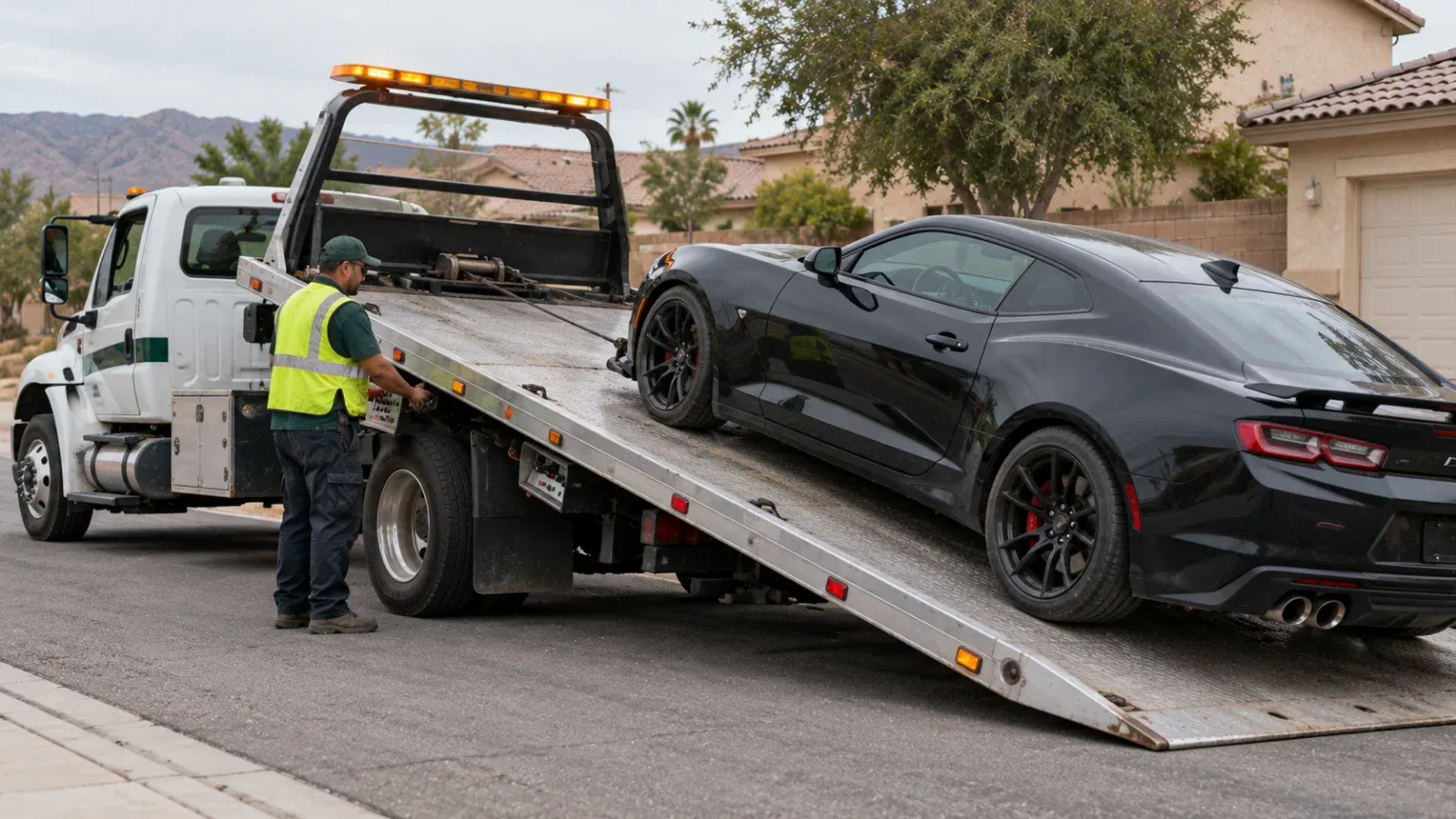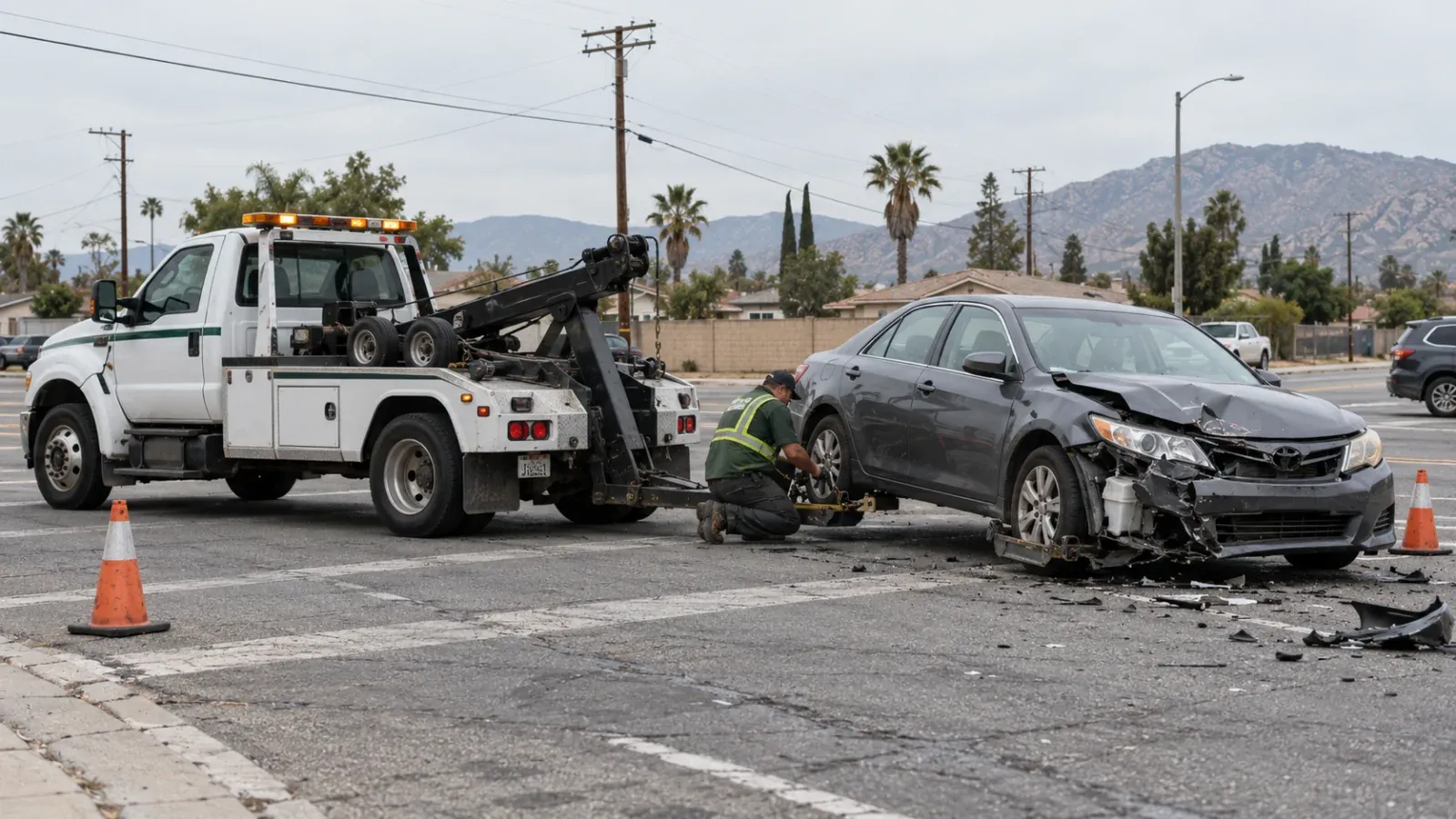
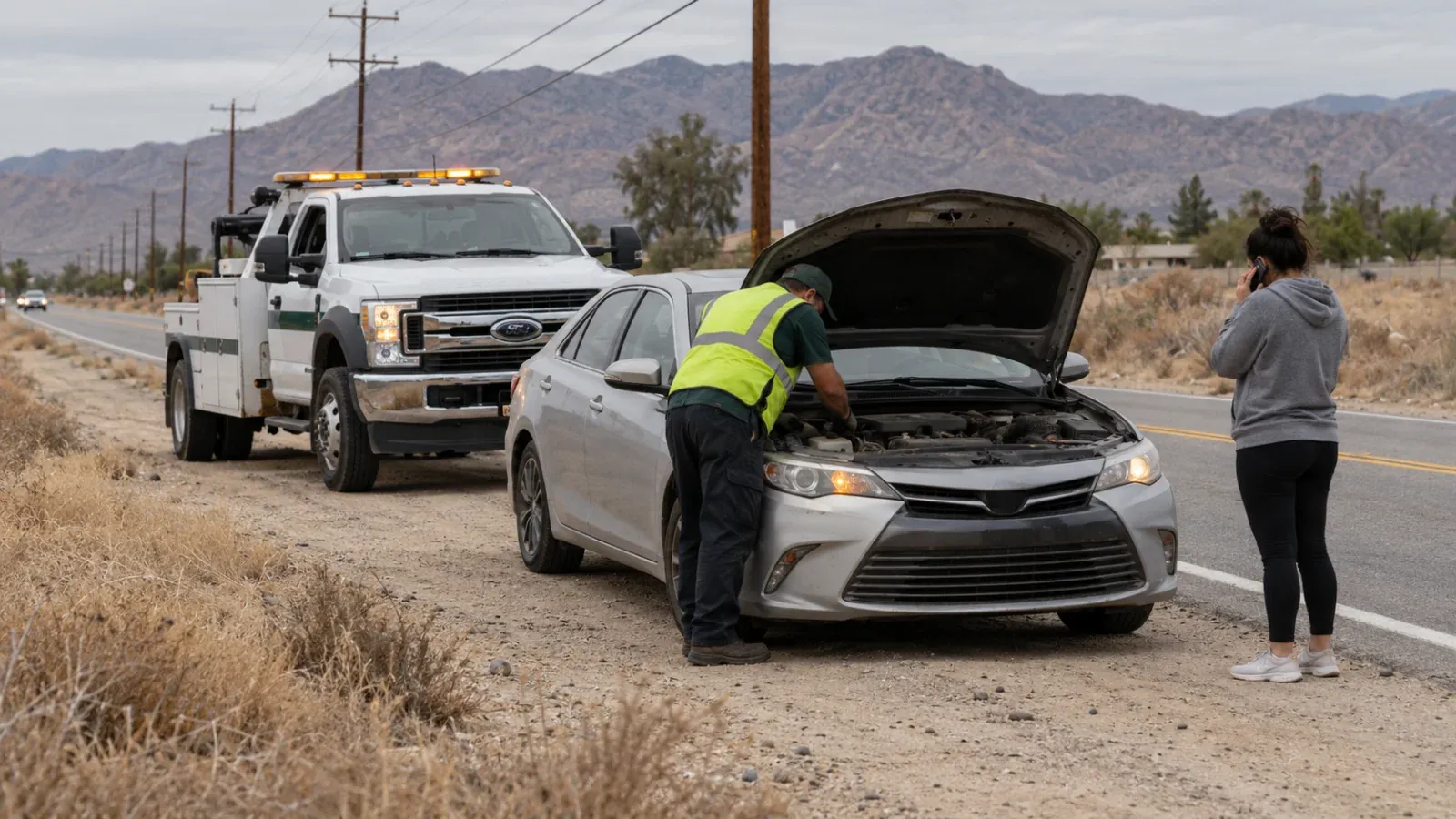
Summer in the Inland Empire is hard on cars. In the San Jacinto Valley, afternoon temperatures regularly climb past 100 degrees, and blacktop gets far hotter than the air. That heat finds every weak spot in a vehicle, and it's why our phones ring nonstop from late spring through early fall.
Here are the summer breakdowns we see most around San Jacinto, Hemet and the surrounding area, how to spot trouble early, and what to do if your car quits on you in the heat.
Why Heat Causes So Many Breakdowns
Engines are designed to run hot, but cooling systems, batteries, tires and belts all have limits. When outside temperatures are high, there's less margin. Add stop-and-go traffic, the air conditioning running full blast, or a long climb up a grade like SR-79 through Lamb Canyon or SR-74 into the mountains, and parts that were "fine" in April can fail in July.
The Most Common Summer Breakdowns We See
These are the calls that spike every summer across San Jacinto, Hemet and the rest of the valley, roughly in order of how often we see them.
1. Dead Batteries
Most people think of cold weather as the battery killer, but heat is often worse. High temperatures speed up the chemical breakdown inside a battery and evaporate fluid, so a battery that has been weakening for months finally gives out on a hot afternoon.
Warning signs: slow cranking, dim headlights at idle, a battery light on the dash, or corrosion on the terminals. Most batteries last roughly three to five years, and less in hot climates. If yours is getting old, have it tested before summer.
If your car won't start, a jump start will often get you going so you can drive to a parts store or shop.
2. Overheating
Overheating is the classic summer breakdown. Low coolant, a leaking hose, a failing water pump, a stuck thermostat or a radiator fan that isn't kicking on can all push the temperature gauge into the red, especially when climbing grades or idling in traffic.
Warning signs: the temperature gauge rising above normal, steam from under the hood, a sweet smell of coolant, or the AC suddenly blowing warm air as the car tries to protect the engine.
What to do:
- Turn off the AC and turn the heater to full hot. It feels awful, but it pulls heat away from the engine.
- Pull over as soon as it's safe and turn the engine off.
- Never open the radiator cap on a hot engine. Pressurized coolant can cause serious burns.
- Don't keep driving. Running an overheated engine can warp the cylinder head or blow the head gasket, turning a cheap hose repair into a major bill.
3. Tire Blowouts
Hot pavement raises tire temperature and pressure. Underinflated tires flex more and build even more heat, which is a recipe for a blowout. Older tires with dry-rot cracks are especially at risk, as are trailer tires that sit all winter.
Prevention: check tire pressure in the morning when tires are cold, using the number on the driver's door jamb, not the maximum on the sidewall. Look for cracks, bulges and uneven wear. And make sure your spare actually has air in it.
If you get a flat, we can help with a flat tire change or tow you to a tire shop if the spare isn't usable.
4. Belts and Hoses
Rubber belts and hoses dry out and crack with heat and age. A failed serpentine belt can take out your alternator, power steering and water pump all at once. A burst coolant hose leads straight to overheating.
When your car is in for an oil change, ask the shop to look at the belts and hoses, especially if the vehicle has a lot of miles.
5. AC Failures
An AC failure won't strand you by itself, but in triple-digit heat it can be a real health risk, especially for kids, older passengers and pets. A clutch or compressor that seizes can also throw the serpentine belt on some vehicles. If your AC starts making noise or blowing warm, get it checked before it fails completely.
6. Running Out of Fuel
It sounds simple, but it happens more in summer: longer road trips, detours, and the long, empty stretches out toward Gilman Springs Rd or up the mountain highways. Running the AC hard also uses more fuel. If you run dry, our fuel delivery brings enough gas to get you to the nearest station.
Stay Safe if You Break Down in the Heat
Breaking down in 105-degree heat is more than an inconvenience. Here's how to stay safe while you wait:
- Get off the road. Pull as far onto the shoulder as you can, or into a parking lot or side street. Turn on your hazard lights.
- Don't sit in a closed car. Without AC, a car interior heats up fast. If it's safe to stand away from traffic, find shade. If you have to stay in the car on a busy highway, crack the windows.
- Drink water. Keep a case of water in the trunk all summer.
- Never leave kids or pets in the car, even for a few minutes.
- Tell the dispatcher if you have small children, elderly passengers, someone with a medical condition, or pets with you. It helps us prioritize.
A Simple Summer Car Checklist
A few minutes of prep before summer saves a lot of headaches:
- Test the battery if it's more than three years old.
- Check coolant level (only when the engine is cold) and look for leaks.
- Inspect belts and hoses for cracks.
- Check tire pressure and tread, including the spare.
- Make sure the AC blows cold and the radiator fans come on.
- Keep water, a phone charger, a hat and a small first-aid kit in the car.
- Save a 24/7 tow number in your phone.
Heading Up the Mountain or Through the Pass?
Trips up SR-74 toward Mountain Center and Idyllwild, or north on SR-79 through Lamb Canyon toward Beaumont and I-10, include long, steady climbs. Watch your temperature gauge on the way up, and on the way down, use a lower gear instead of riding the brakes so they don't overheat and fade. If you're towing a trailer, double-check its tires and your vehicle's cooling system before you go.
Broken Down in the Heat? We're Close By
Nick's Towing San Jacinto is based in San Jacinto and runs calls across the valley 24/7, all summer long. In San Jacinto and Hemet we typically arrive within 30 to 45 minutes depending on traffic, and we'll tell you a realistic ETA when you call. Whether you need a jump, a tire change, fuel, or an emergency tow to your mechanic, call (951) 355-4290. We quote up front before we dispatch.